The current Ebola (Bundibugyo) outbreak was recognized on May 5, 2026, when a cluster was tested in DRC. A retrospective assessment was conducted from April 15-May 13 and identified 246 cases and 65 deaths. That means that the disease had been spreading for over three weeks without anyone knowing. This outbreak has become the fastest growing Ebola outbreak in history.
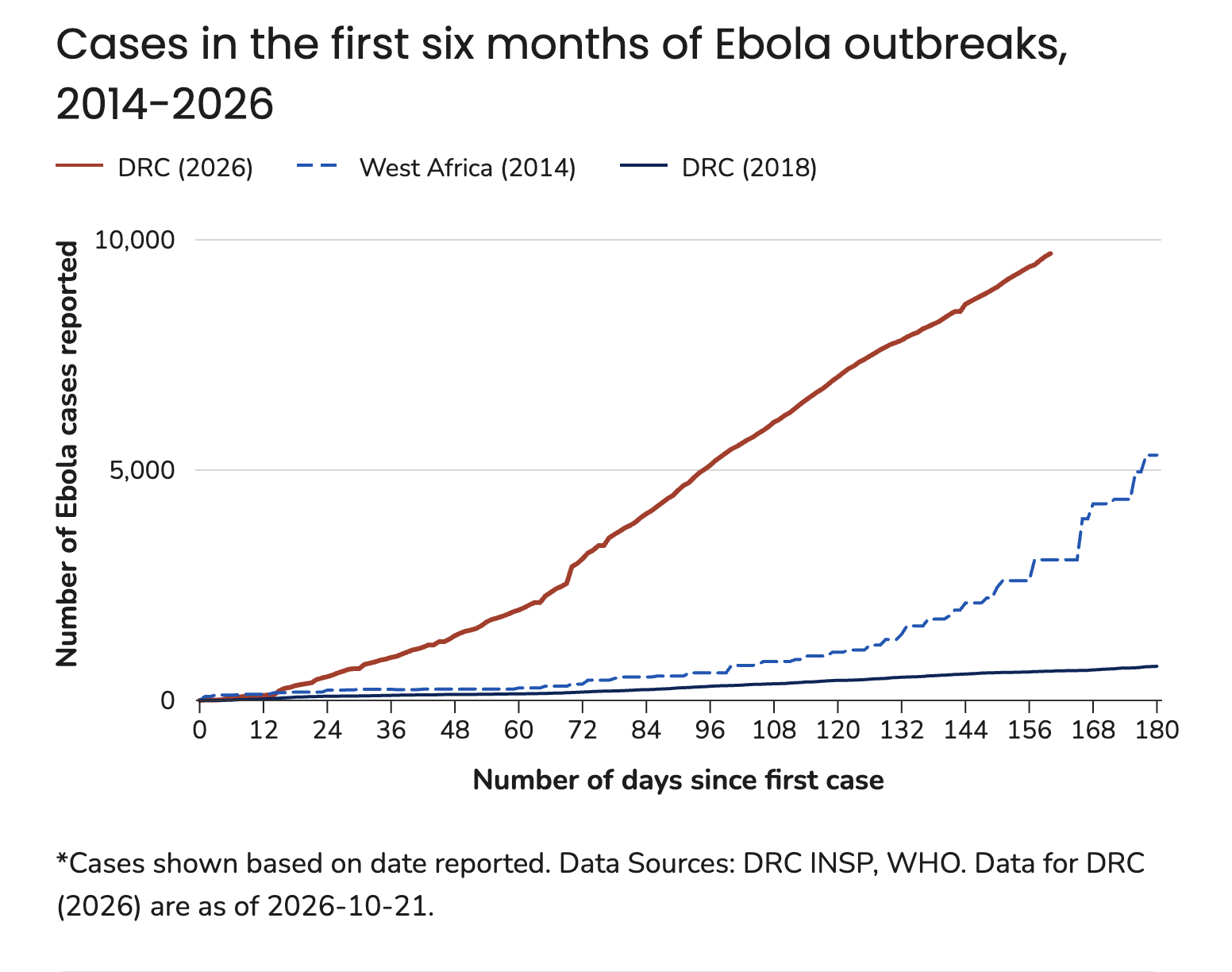
Figure 1. Centers for Disease Control and Prevention graph of the current Ebola outbreak compared to the last two significant outbreaks in 2014 and 2018.
The distribution of disease has shifted over the last week and impacted other countries. Below is a list of cases by country, what we know, and discrepancies that remain.
Democratic Republic of the Congo (DRC): This is where the outbreak began and has quickly spread. The graph above compares the current outbreak (red) to the last two significant outbreaks in 2014 and 2018. This should be alarming to everyone. As of October 20, there have been 9,637 cases in DRC with 4,646 confirmed deaths.
Kenya: 9 confirmed cases with one death and eight people still hospitalized. This country is new to the list as of October 6th when the first death was reported by the Ministry of Health. The case was traveling from DRC, drove through Uganda, and took a short flight to Kenya on October 3rd. The patient died on October 5th and the Ebola death was reported on the 6th. Eight other people including family members and healthcare workers in Kenya are now infected and are in care. There have been 135 contacts reported from those patients. The Ministry of Health states that 134 contacts have been followed-up and are in quarantine or being monitored. Five contacts have been located outside of Kenya, but the report did not specify if they were in Uganda, DRC, or where.
The larger concern is that this case traveled by car all the way from DRC to the capital of Uganda, a densely populated area, and then went through an airport to a flight. The incubation period for Ebola is up to 21 days, averaging 8-10 days. The report from the Ministry of Health did not describe when symptoms started, but the case most likely experienced symptoms during travel through Uganda. The typical presentation of the disease is flu-like symptoms for 1-6 days, GI symptoms 4-8 days, hemorrhagic (bleeding) and neurological symptoms around day 9-11, and death can occur after that. The average length of disease to death has been documented as early as 6 days to over 16 days. If we take the lowest documented number of days with symptoms to death (6), that would imply the case was contagious at least four days of travel through Uganda and possibly DRC as well.
Nigeria: The first case was reported on October 20th. According to the Nigerian Ministry of Health, the female patient arrived in Nigeria from Uganda on October 3rd and symptoms began on the 7th. The patient was hospitalized on the 11th and remains in care. Other reports suggest that the patient had symptoms for 13 days before getting tested. The Uganda Ministry of Health released a statement on October 21st stating that the patient only traveled through Uganda from DRC in transit to Nigeria. They boldly stated that there are no cases of Ebola in Uganda. However, multiple reports are being released this morning stating that the woman did travel for business to DRC and then had a 2 ½ week holiday in Uganda before returning to Nigeria. The Director-General of the African CDC also stated that the patient was in Uganda for holiday prior to travel to Nigeria. She believed she had malaria based on her flu-like symptoms and went to the hospital for treatment. There are many discrepancies between the reports on this case and between Ministries of Health. It is best to lead with caution and humility when there is potential of spreading a life-threatening illness. I personally hope that the epidemiological tracing of this case is checked and that all possible contacts are reached so we do not see preventable transmission.
Uganda: The Ministry of Health in Uganda stands strong on its stance that it has been Ebola-free since July, 2026. There were unusually high border crossings from DRC when the outbreak began. The most recent Kenya case traveled by road and plane through Uganda (likely with symptoms). Then the most recent Nigeria case either just went through the airport or spent weeks there after being in DRC first. There is extremely limited testing in Uganda (four sites), which was analyzed in my last article. The country states that borders are closed between DRC and Uganda, but people have traveled to Kenya and Nigeria from DRC through Uganda. Both of those travel cases also passed through the Ugandan airport (at least one with symptoms), so we have to wonder if screening is even happening. You can read more about testing sites and the Ebola-free declaration here.
*France: There was one reported case in France in June, but it was a humanitarian physician stationed in DRC to help with the outbreak. He was transferred to a hospital in France and made a full recovery.
OUTBREAK TOTALS
There have been 9,668 cases and 4,649 confirmed deaths. As a reminder, these are cases we know about that have been confirmed. This outbreak has had significant challenges including violence against healthcare workers, limited infrastructure, cross-border travel, misinformation, local conflict, and varying levels of access to testing by region. You can read more about challenges in one of my previous updates.
CASE FATALITY
The case fatality rate of confirmed cases is approximately 48.09%. That means, from the cases we know about, nearly one in two people who are infected will die from this disease.
STATISTICAL SPREAD OF DISEASE
Statistically, each person infected with this strain of Ebola is likely to spread it to at least three other people (R0 = 3.26). Some estimates suggest that this strain could follow a pattern of up to 8.9, meaning almost 9 people are likely to get infected from one person with active disease.
TRAVEL
Many countries have placed 21-day quarantine mandates for travelers coming from anywhere in DRC and neighboring regions. You can find travel requirements from each government website. KLM has not updated their travel warning, and as of today, it states that travel to DRC and Uganda is banned through September 20th. It is unclear if that has been lifted or if they are still not traveling there as one of the largest international airlines in that region. It is also unclear if airports in the region are screening for flu-like symptoms.
VACCINE
There have been no updates from the World Health Organization or DRC Ministry of Health on the vaccine for the previous strain that was deployed in DRC with hope of reducing severity.
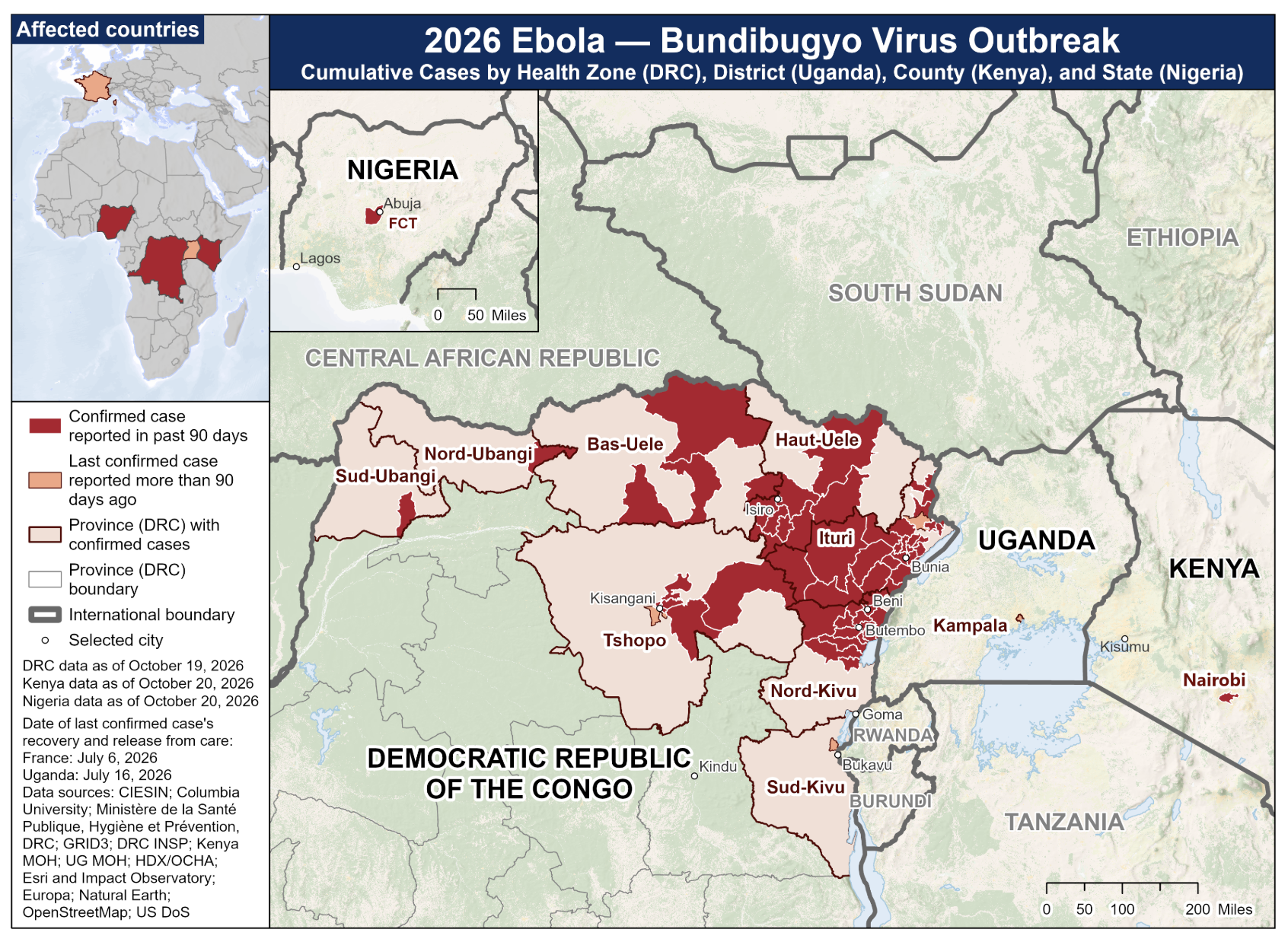
Figure 2. Centers for Disease Control and Prevention map of DRC areas affected by the current Ebola outbreak.
Friends in those regions, please stay vigilant. If you are one of our partners or are currently located in Uganda, DRC, or neighboring countries, please email us to get copies of free training resources and assistance (info.meetingtents@gmail.com). We stand with you and are here to help.
RESOURCES
https://www.ecdc.europa.eu/en/ebola-outbreak-democratic-republic-congo-and-uganda
https://www.cdc.gov/ebola/situation-summary/index.html
https://www.cdc.gov/ebola/hcp/clinical-signs/index.html
https://pmc.ncbi.nlm.nih.gov/articles/PMC13380055/
https://www.bbc.com/news/articles/c62kepvg2x9lo
https://www.instagram.com/ministryofhealth_uganda
https://www.klm.com/information/travel-alerts
https://www.who.int/emergencies/emergency-events/item/2026-e000253