Ebola Update: July 2026
The current Ebola (Bundibugyo) outbreak was recognized on May 5, 2026, when a cluster was tested in DRC. A retrospective assessment was conducted from April 15-May 13 and identified 246 cases and 65 deaths. That means that the disease had been spreading for over three weeks without anyone knowing.
As of July 26th there have been 3,284 cases. The majority of those have been in the Democratic Republic of the Congo (DRC) (3,262 cases) with 1,437 deaths (44.05% case fatality rate). There are 15,498 people who have been identified as contacts that require follow-up and quarantine. Over 720 active cases are currently in isolation. Uganda has reported 23 cases with three deaths, and France reported one case from a humanitarian worker in DRC who recovered.
This outbreak has become the fastest growing Ebola outbreak in history. We often look at outbreaks with different calculations and markers, and one of those is a 100-day count. That helps give us a picture of how fast a disease is spreading. Below is a graph from the US Centers for Disease Control and Prevention (CDC) that compares this current outbreak to other significant Ebola outbreaks in DRC (2018), Guinea (2014), Sierra Leone (2014), and Liberia (2014). It is alarming and evident that this outbreak has surpassed typical patterns, and we have not even hit the 100-day mark yet.
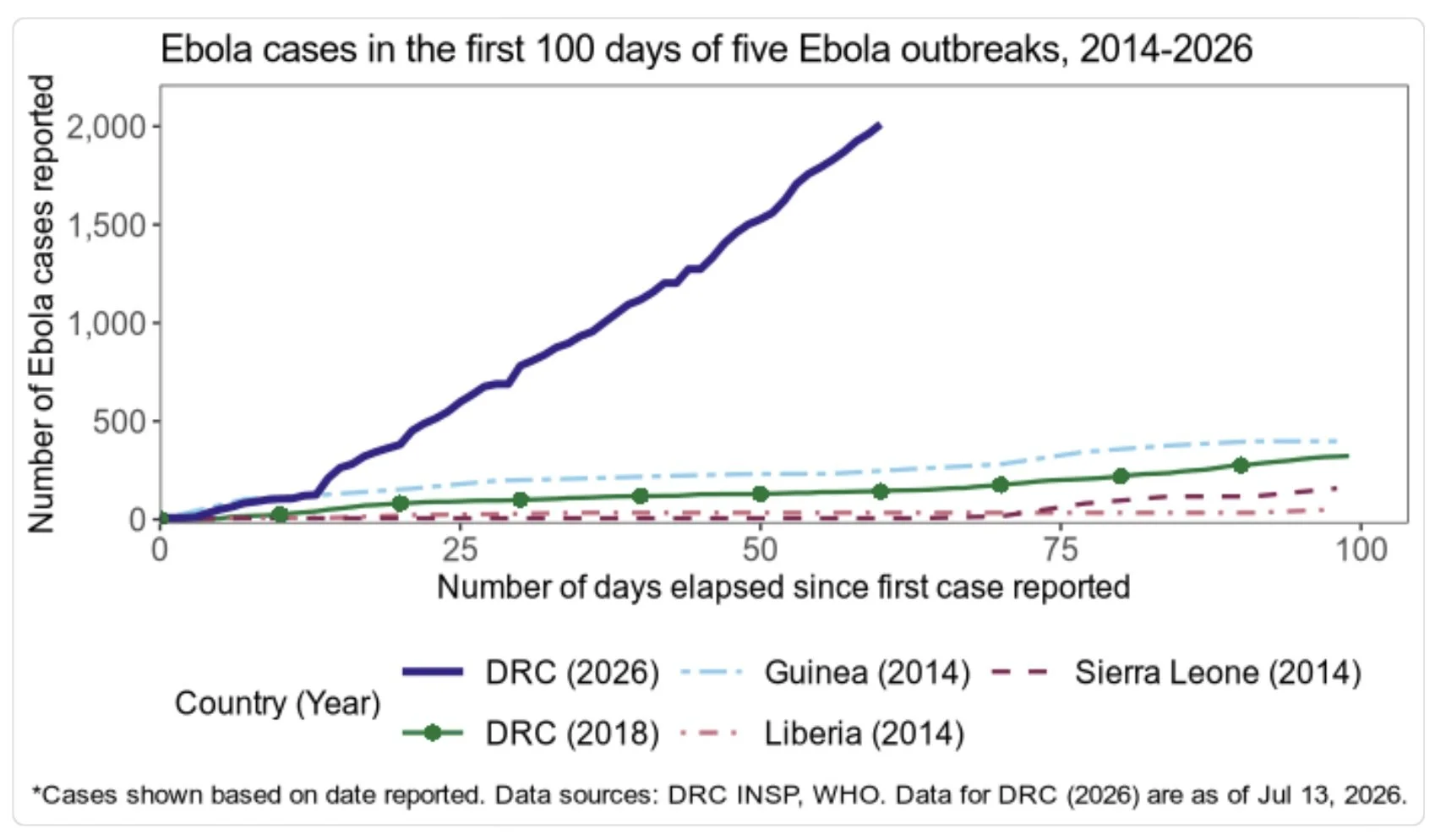
Figure 1. CDC graph of the first 100 days of the current Ebola outbreak compared to other significant outbreaks.
There are several factors that influence why this outbreak is spreading so quickly. Read my original post here to understand some of the complexities that exist from funding cuts, conflict, location, and disease distribution.
The outbreak has spread to five provinces and 48 health zones in DRC, heavily concentrated on the Uganda border, which is where most refugees cross (read previous article for more). The CDC map below highlights the disease distribution by region and number of cases. On July 29th, Uganda declared itself to be Ebola-free after documenting 42 days after the last patient was released from the hospital. The WHO has not released a statement or confirmation about this yet. There have been no updates on whether or not the country received rapid test kits or expanded beyond the four testing sites for the entire country. Uganda closed its border with DRC on May 27th after receiving nearly 600 refugees per day through April when the outbreak started. They now require a 21-day quarantine period for anyone crossing the border. While the country announced it was Ebola-free, I would highly suggest caution for those who are sick, especially with the limited (reported) testing resources and the rapid spread from the outbreak origin so close on the border. One of the most popular airlines in Uganda, KLM, has further suspended flights into the country until at least August 31st.
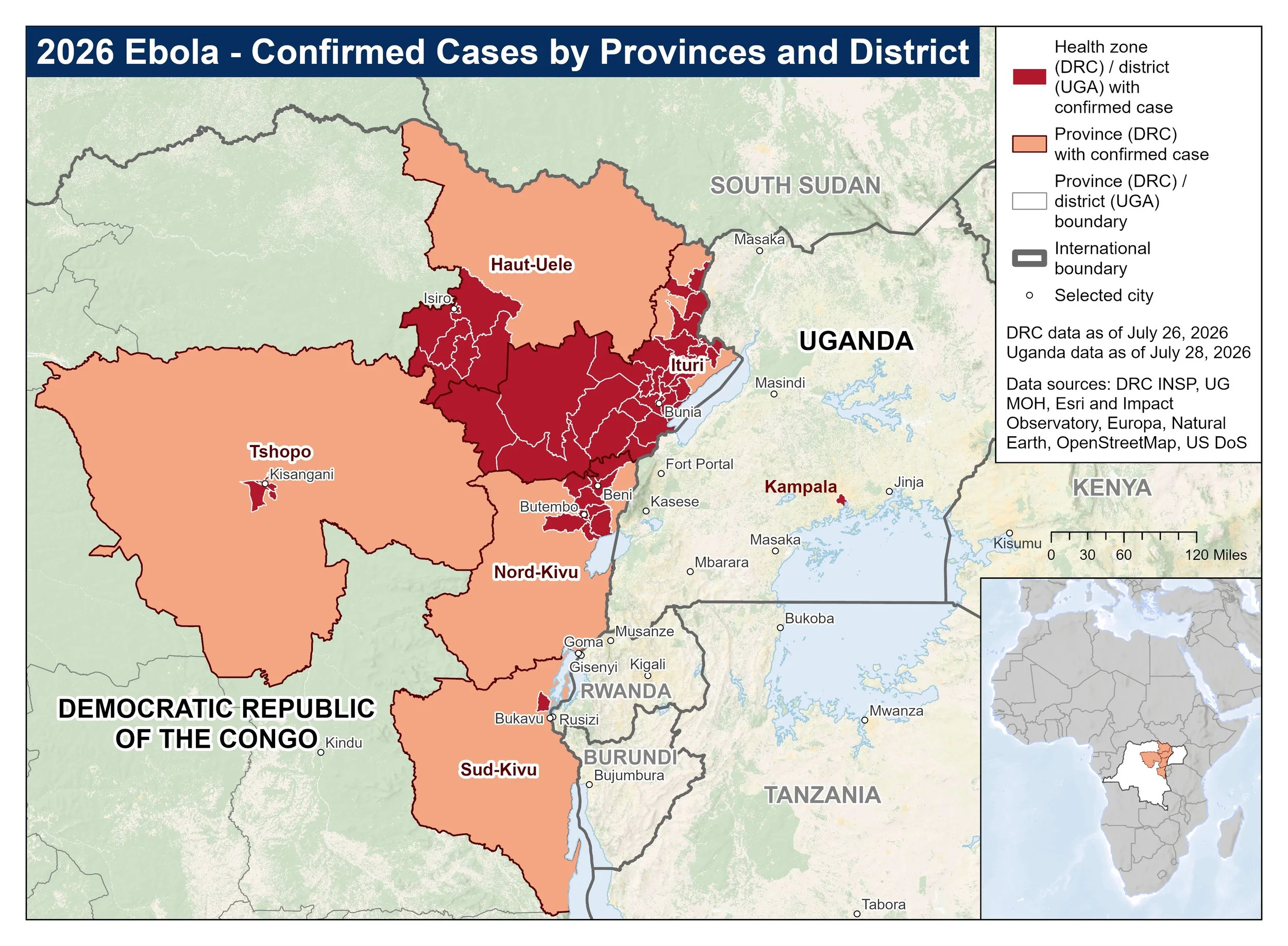
Figure 2. CDC map of areas with confirmed Ebola cases (DRC and Uganda).
Friends in those regions, please stay vigilant. If you are one of our partners or are currently located in Uganda or DRC, please email us to get copies of free training resources and assistance (info.meetingtents@gmail.com). We stand with you and are here to help.
RESOURCES
https://www.cdc.gov/ebola/situation-summary/index.html
https://www.klm.com/information/travel-alerts
https://www.who.int/emergencies/emergency-events/item/2026-e000253